
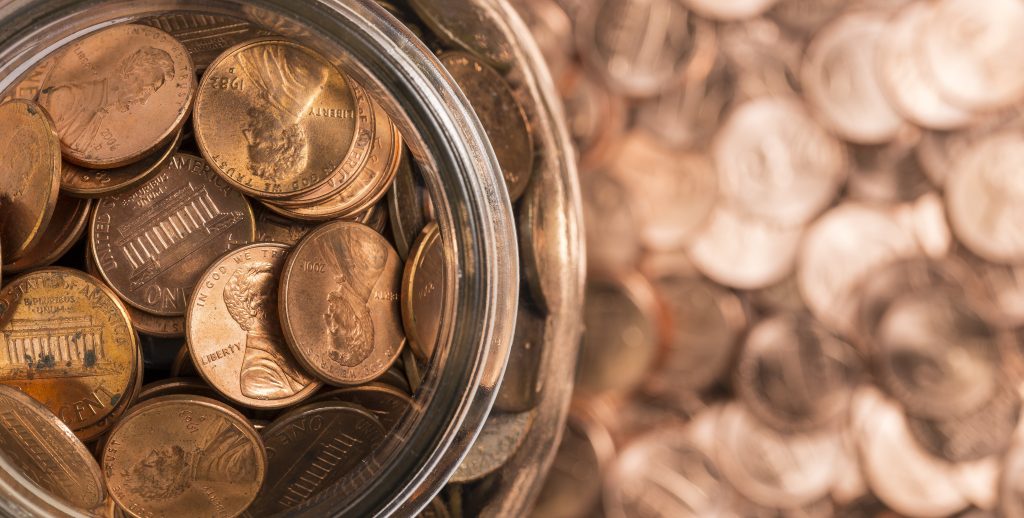
You may have heard the news, the U.S. Mint has stopped producing new pennies. While this might sound like a big change, we wanted to take a moment to walk you through what it means for you and answer questions you might have.
Why Are They Stopping Penny Production?
Over the past decade, it’s become increasingly expensive to produce pennies, with each one now costing 3.69 cents to make. With more people using cards and digital payments, the Treasury Department decided it was time to stop production and save taxpayer dollars (about $56 million annually, to be exact).
The good news? The roughly 250 billion pennies already out there aren’t going anywhere. They’ll keep circulating for as long as people continue using them.
Your Pennies Are Still Valuable
Pennies retain their full value indefinitely. You can still use them for purchases at any business that accepts cash, and you can always deposit them with us at Bryant Bank. If you have a larger amount to deposit, we may ask that they be rolled or wrapped first—just check with your local branch to confirm our process before you come in.
The Treasury Department is encouraging people to spend their pennies rather than save them at home. This helps keep them in circulation and gives businesses time to adjust their systems.
What About Prices?
For debit card, credit card, and digital transactions, nothing changes. For cash transactions, you may start to see prices rounded to the nearest nickel. Here’s the important part: prices will round down just as often as they round up, so overall, you shouldn’t see any difference in what you’re paying. Sales tax is calculated on your exact purchase total before any rounding happens.
What this means for Bryant Bank Transactions
As long as our branches still have pennies in their inventory, we will continue to provide pennies when cashing checks and providing cash back on deposits. We may place limits on requests for rolls of pennies in order to have pennies available to all customers for as long as possible.

For Our Business Banking Customers
If you operate a retail business, now is the time to start thinking about how this change might affect your operations. Here are a few things to consider:
Point-of-Sale System Updates: Check with your POS provider about adding rounding functionality for cash transactions. Most systems can be configured to round to the nearest five cents automatically.
Staff Training: Make sure your team understands how rounding works and can explain it to customers confidently. Clear communication at the register will help ensure smooth transactions and maintain customer trust.
Customer Communication: Consider posting signage at your register or including information on receipts about your rounding policy for cash transactions. Transparency helps customers feel comfortable with the change.
Transaction Tracking: Review how your accounting system handles rounded transactions to ensure accurate record-keeping and reporting.
Remember, this only affects cash transactions, all card and digital payments remain unchanged, which already make up many retail transactions for most businesses.
If you have questions about how this might impact your business or need help thinking through the transition, your Bryant Banker is here for you.
